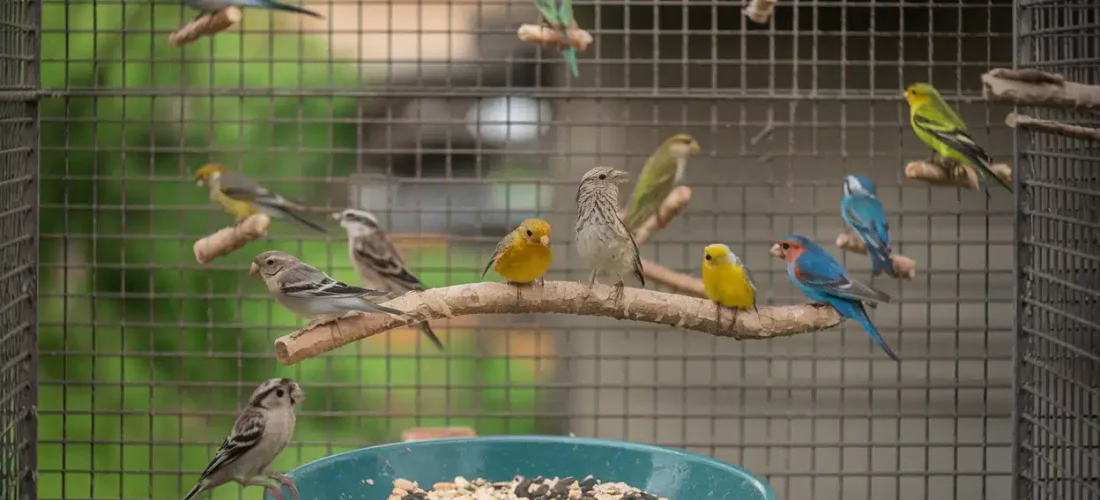
Are you wondering how to provide the best diet for your caged birds? The diet proves crucial for their well-being. Let’s explore together the specifics of granivorous, insectivorous, frugivorous, nectarivorous, and omnivorous birds – not to mention how to adapt food and feeders for a fully fulfilling life in a cage!
Table of Contents
ToggleGranivore
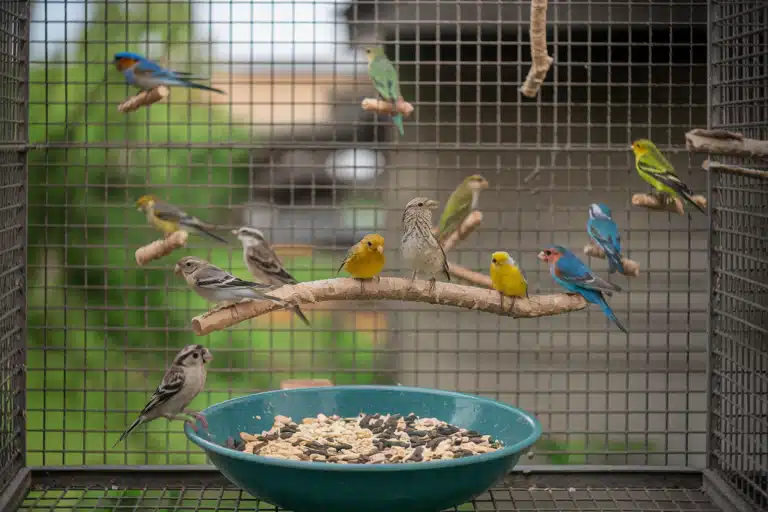
Most cage-raised birds belong to the granivore category. These animals require a seed-rich diet, particularly canaries, Java sparrows, or zebra finches. Parrots and parakeets, often considered exotic animals, complement their diet with these products.
To maintain a balanced diet, here are the seeds to prioritize:
- Canary grass seed: The base of mixes for canaries, it provides energy and easy digestion thanks to its carbohydrates.
- Millet: Its varieties (yellow, red, white) generally please birds while providing nutrients and fibers.
- Sunflower seeds: Rich in lipids, the black variety requires moderation. Prefer hulled seeds to limit waste.
- Niger: Its beneficial oil supports plumage during molting or cold seasons.
- Oats (groats): Its fibers regulate intestinal transit, contributing to the bird’s overall well-being.
Note that a regular rotation of seeds and mixes helps cover all nutritional needs.
Practically, anti-waste feeders with built-in grids are ideal for these granivores. Make sure to check the seed level daily – a well-filled dispenser prevents deficiencies. For parakeets and parrots, some specific accessories facilitate their feeding in cages.
Insectivore
Cage insectivorous birds need a diet rich in animal proteins. Available online or in stores, these dried insects are an ideal protein source. Note that the brands Versele Laga and Vitakraft offer products suited to these exotic animals. Distribute them as a supplement to the main ration, about 5g per 100g of seeds in addition to their main menu.
For these birds, insect-based pâtés offer a practical alternative to live prey. Paradoxically, the cuttlebone remains essential despite its rudimentary appearance – it provides the calcium necessary for their metabolism. Regarding food storage, keep foods in a cool and dry place to preserve their nutritional quality, as well as water reserves. A tip: regularly check container seals, especially for seeds and more sensitive mixes.
Frugivore
Cage frugivorous birds require particular attention to their fruits. Figs, raspberries, or papayas are excellent choices, as are apricots and mangoes. But beware: apple and pear seeds contain cyanide, which must be removed systematically. Note that these birds often have more liquid droppings, implying more frequent cage cleaning.
| Fruit | Main Nutritional Contributions | Precautions and Remarks |
|---|---|---|
| Figs, Raspberries, Papayas, Apricots, Mangoes | Rich in vitamins, minerals, and fibers. Source of vitamin C. | Preferable to apples, grapes, and oranges. Serve fresh and cut into small pieces. |
| Apples, Pears | Source of dietary fibers, important for intestinal transit. | Remove seeds that contain cyanide strictly. |
| Grapes, Oranges | Contain vitamin C. | Offer in moderation, as they are less nutritious than other fruits. |
| Oil-rich fruits (walnuts, almonds) | Rich in good fats and vitamin E, especially during breeding season. | Give in small amounts as a treat. |
| Dried fruits | Concentrated source of nutrients and fibers. | Give in moderation due to their high sugar content. |
Legend : This table compares the nutritional contributions of different fruits commonly given to caged birds. It highlights the benefits and precautions to take for each fruit type to ensure a balanced and healthy diet for frugivorous birds.
For hygiene, a daily cleaning of soiled areas is recommended. White vinegar proves useful here. Once a week, it is better to completely disinfect the cage and its accessories – feeders, drinkers, and other elements. The frequency naturally varies depending on the number of birds, species (such as parakeets or parrots), and even seasons. Paradoxically, some seeds forgotten in corners require increased vigilance.
Nectarivore
Cage nectarivorous birds require a specific diet based on artificial nectar. Note that it is not recommended to use honey, brown sugar, or sweeteners in their preparation – these ingredients ferment too quickly. A common recipe? Simply mix one glass of white sugar in four glasses of warm water. For hummingbirds, this water/sugar mixture remains the essential base of their diet.
Adapting feeders is as important as the recipe. Did you know that some feeders with holes reduce food waste? In practice, favor these models and check their content daily. Nectarivorous birds in cages consume their ration quickly – regular feeder refills are necessary to maintain food freshness.
Omnivore
The diet of omnivorous cage birds requires a delicate balance between plant and animal resources. Rather than limiting to classic seeds, opt for a variety of juicy fruits, crunchy vegetables, and proteins from dried insects. Ideal proportions vary according to species – generally count on 60-70% premium seeds, 20-30% fresh plants, and 10% animal supplements. A good dispenser allows precise dosing of these mixes while limiting waste.
Note that food preservation requires special attention. Insects, often favored by parakeets and canaries, freeze easily to preserve their nutrients. As for fruits, it is better to store them chilled in airtight containers and consume within a few days after purchase. Remember to check drinkers daily: clean and renewed water remains essential for these demanding animals. With suitable accessories and a bit of discipline, maintaining the quality of products offered to these exotic birds is easy.
Comparison
The choice of a suitable diet for your birds mainly depends on species, but also your budget and available time. Beginners will appreciate granivorous birds such as canaries or parakeets, which are satisfied with seed mixes in a feeder. Conversely, exotic animal enthusiasts will lean towards parrots. Naturally, the monthly cost varies significantly by species: count on 5 to 40€ for basic feeding. As for accessories, a simple feeder suffices for granivores, while insectivores require an adapted vivarium. To discover appropriate cages and dispensers, the website Oiseaux et Cages – Magazine offers expert advice.
| Criterion | Granivore | Insectivore | Frugivore | Nectarivore | Omnivore |
|---|---|---|---|---|---|
| Monthly Cost | 5-15€ | 20-40€ | 10-25€ | 15-30€ | 15-35€ |
| Typical Species | Canaries | Lories | Toucans | Hummingbirds | Parrots |
| Difficulty | Low | High | Medium | Medium | Variable |
| Required Equipment | Feeder | Vivarium | Fruit bowl | Dispenser | Combined |
Knowing how to feed your caged birds according to their diet – granivore, insectivore, or other – remains essential for their daily health. Carefully choosing appropriate accessories like feeders is imperative, alongside varying nutritional inputs. Naturally, each species requires particular attention to its specific needs. Start now good habits to offer your companions a serene and fulfilling life.