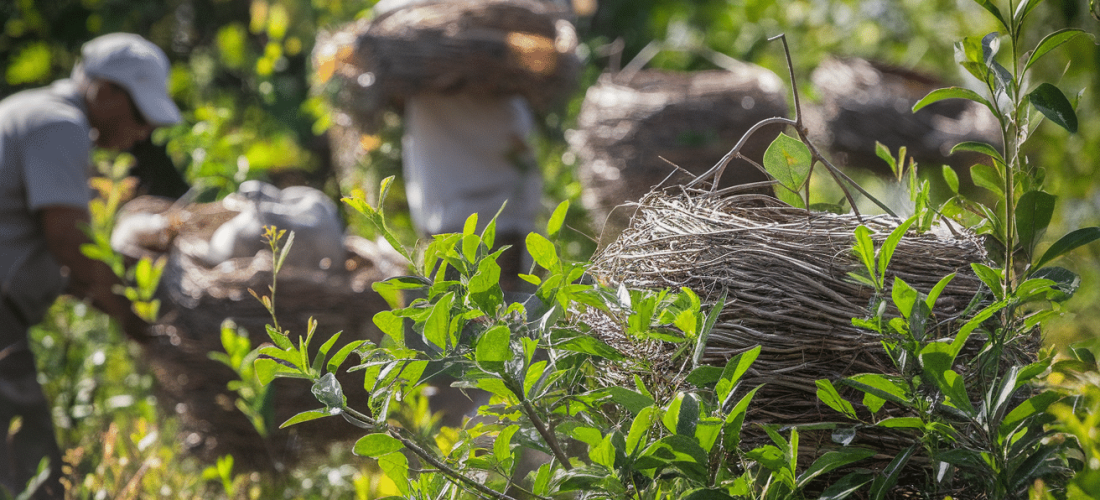
To help swallows and other birds reproduce, installing artificial nests proves to be an effective solution. These devices provide a safe shelter where birds can build their nests, which is crucial for their survival, especially in a context where their natural habitat is threatened. Thanks to these nests, these birds can reproduce peacefully and strengthen their population.
Table of Contents
ToggleThe reasons to install artificial nests
The habitats of swallows are becoming scarce, leading to a deterioration in their breeding conditions. By offering artificial nests, we facilitate their return and settlement. These ready-to-use nests allow birds to save their energy, as each swallow must make many trips to build its own nest, a long and exhausting process.
By preparing artificial nests, we participate in the preservation of these species and contribute to the biodiversity of our environment. Thus, every gesture counts to improve the living conditions of birds.
How to install an artificial nest?
For artificial nests to be effective, their installation must respect certain conditions. It is important to place them at an adequate height, from 2 to 5 meters, sheltered from drafts and away from predators. A well-positioned nest will more easily attract birds.
The materials used for these nests can vary, but it is preferable to favor durable solutions. Wooden nests or those made of recycled materials are often appreciated by swallows and strengthen their sense of security.
Maintaining the installed nests
Maintenance of artificial nests is also a key factor in their success. It is essential to regularly check their condition to ensure a healthy environment for the swallows. By cleaning and repairing damaged nests, their durability is ensured, which is beneficial for future generations of birds.
Moreover, maintenance goes beyond simply checking the nests. By limiting nuisances nearby, such as cats or other predators, the chances of reproductive success for swallows increase.
A beneficial initiative for everyone
By contributing to the installation of artificial nests, we are not only supporting swallows but also enriching our environment. These birds, in return, bring beauty and dynamism to our daily lives. Watching them flutter around our houses during spring is a true spectacle of nature.
Everyone can get involved in this rewarding approach. Whether you are a bird enthusiast or simply curious, installing an artificial nest can be a wonderful way to take meaningful action.
Do you think it is possible to influence the swallow population simply with artificial nests? What advice would you like to share on this subject?