Table of Contents
ToggleRose-breasted Cockatoo: Guide for a Charming Pink and Grey Companion
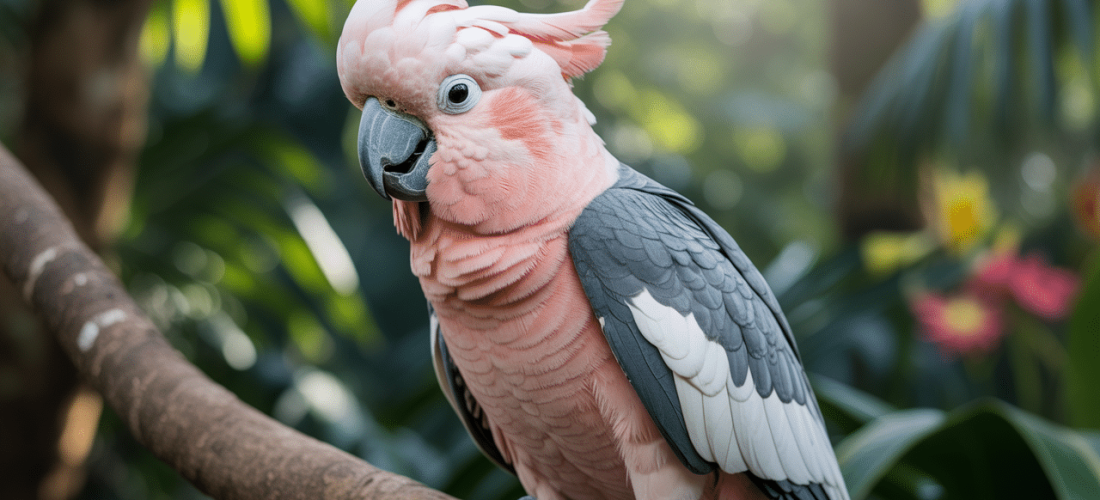
The rose-breasted cockatoo, also known as the Galah, is much more than just a bird. This charming companion, with its pink and grey plumage, brightens the lives of those who choose to welcome it. This guide will reveal everything you need to know about this fascinating bird, from its appearance to its needs, including its endearing character.
A Physique Full of Elegance
The body of the rose-breasted cockatoo is delicately pink, while its tail, wings, and under-tail region display a more nuanced grey. Its dark eyes and light feet add to its charm. Its light pink crest crowns this already particularly attractive bird. Measuring about 32 cm, this cockatoo is also well known for its impressive lifespan of 40 years, making it a long-term companion.
A Sociable and Affectionate Behaviour
The rose-breasted cockatoo is a social bird that never tires of human company. It is known for its affectionate and playful nature. Often considered a true little clown, it will bring smiles and joy to your daily life. However, it is important to understand that it needs frequent attention and interaction to thrive fully.
A Very Intelligent Companion
This cockatoo has sharp intelligence that allows it to talk and imitate common sounds, which makes it even more captivating. If you are looking for a bird that can become a true family member, the rose-breasted cockatoo should be at the top of your list. Learning to talk and sharing special moments with it will be a true adventure.
Raising the Rose-breasted Cockatoo: What You Need to Know
For successful breeding, it is essential to provide them with a comfortable nest. Indeed, they do not reproduce with difficulty if the conditions of their habitat are respected. Incubation lasts between 23-24 days, and the young take flight about 7 weeks after hatching. Offering a comfortable nest is crucial for its health and well-being.
Dietary Needs
The rose-breasted cockatoo requires a varied diet. Its diet should include seeds (sunflower, pumpkin, safflower, etc.), but also fruits and vegetables, with a preference for apples, oranges, and grapes. Learning to feed it well is essential for its health.
The Ideal Environment
For a happy rose-breasted cockatoo, a spacious aviary is recommended. Although it can adapt to apartment life, it definitely prefers having space to expend energy. Its behaviors will be more harmonious in an environment where it can fly freely. Creating the ideal environment for it is a guarantee of happiness.
In short, adopting a rose-breasted cockatoo requires thought and preparation. Are you ready to let this charming being into your life, ready to share your daily life with an intelligent and affectionate bird? What experiences have you had with this fascinating bird, and what stories would you like to share?