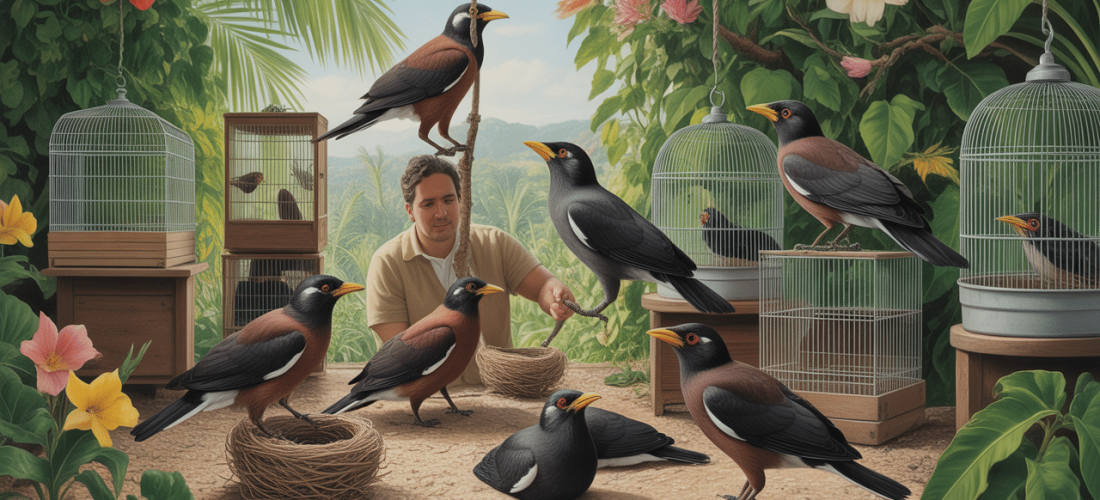
Raising common hill mynas is a unique adventure. This captivating passerine, gifted with exceptional intelligence and a certain talent for language, requires specific care. Understanding its dietary needs, behavior, and environment is fundamental to ensuring its well-being. This text focuses on breeding techniques that allow for effective care of these fascinating birds.
Table of Contents
ToggleChoosing the habitat
To begin with, the habitat of a common hill myna must be carefully selected. A spacious cage is essential, at least 150 cm high and 60 cm wide. Adequate space to fly is crucial for its health. The cage must be equipped with perches at different heights, as well as accessories like toys to stimulate its curious mind.
It is also important to place the cage near a window so that the bird can enjoy natural light. This promotes its well-being and contributes to the quality of its plumage. A bright and secure environment is of great importance for an active bird like the common hill myna.
Balanced diet
Another key aspect of breeding is feeding. Common hill mynas do not eat seeds. They are insectivores and frugivores. An appropriate diet must therefore include insects, such as mealworms, as well as fresh fruits. Specific soft foods for insectivorous birds are also recommended. This variety contributes to optimal health and a radiant plumage.
It is advised to feed the mynas 2 to 3 times a day, making sure to quickly remove any uneaten food. Fresh meals must be regularly replaced to avoid any risk of rot, a detail often overlooked but essential to prevent digestive disorders.
Behavior and sociability
The common hill myna is a social bird that requires regular interaction. Ideally, it is better to adopt two individuals to prevent boredom and stress. They feel safer in an environment where they interact with their peers. Mynas have an innate need to satisfy their curiosity and thrive in a space rich in stimuli.
Birds enjoy spending time with their owners. They appreciate games and moments of cuddling, which strengthens the bond between the bird and its owner. Regular contact allows them to get used to the human environment and develop language; they are known for learning words easily!
Hygiene and regular care
The well-being of a common hill myna also depends on impeccable hygiene. The cage must be cleaned daily, removing droppings and food debris. This reduces the risk of disease and ensures a pleasant living space for the bird. It is recommended to use bedding such as hemp, which is easy to clean and environmentally friendly.
Finally, it is best to provide a bathing tray so that the myna can wash itself. They love getting wet and this helps keep their plumage clean. A bathing routine also helps maintain their feathers shiny and healthy.
Open conclusion
Raising common hill mynas requires particular attention and an understanding of their specific needs. Care, diet, and living space are all key factors for their thriving. Have you ever thought about the impact that your commitment to these birds could have on your daily life?